Computational Physicist & Simulation Architect
After AIAA SciTech 2026 concluded, I had a quiet moment to reflect on a few experiences and thoughts worth sharing—less about technical content and more about the people and moments that quietly shape a professional journey. They are also about methodological choices, practical priorities, and personal traits that influence our professional and life decisions.
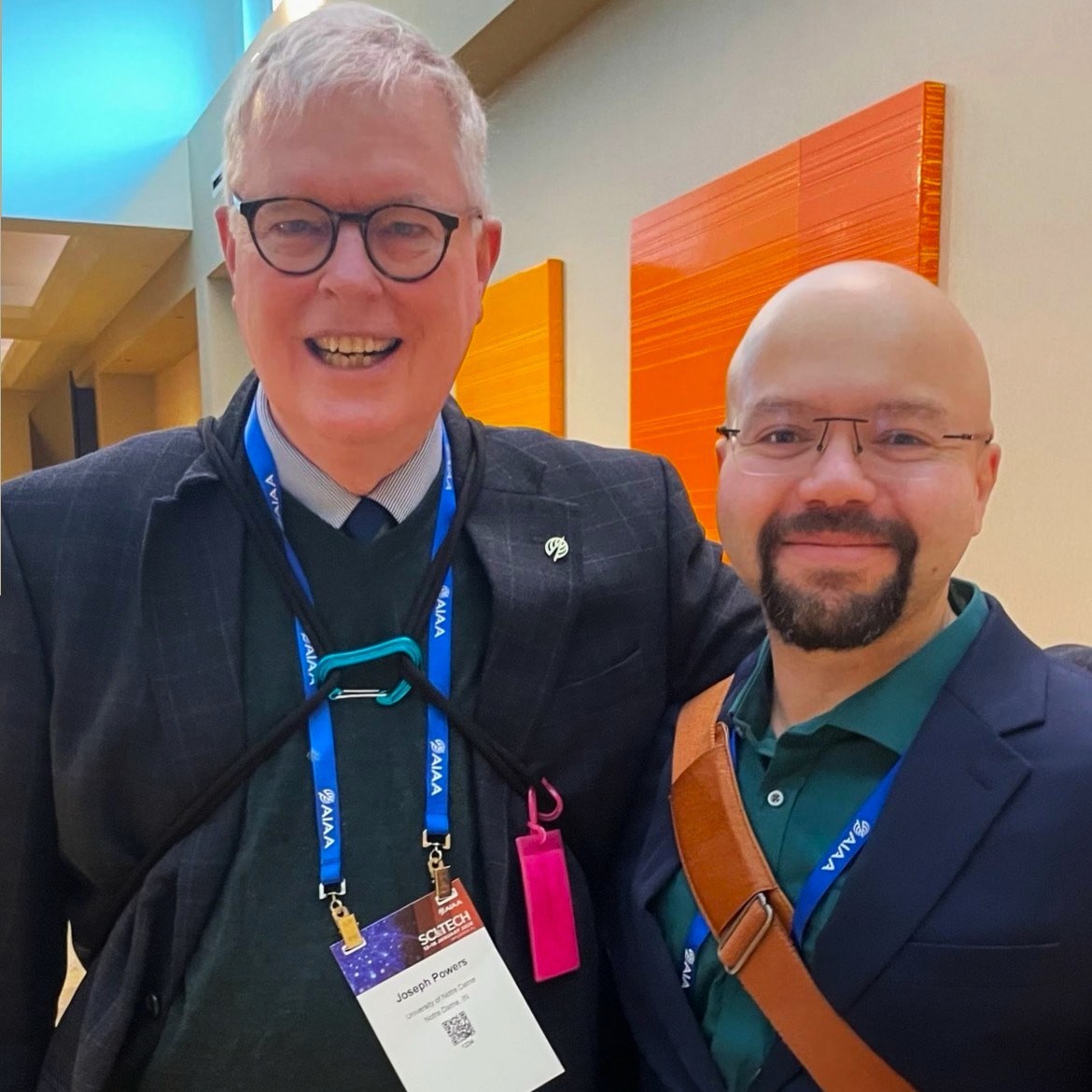
One moment that stood out was a spontaneous and warm photo taken during a busy conference day with Professor Joseph Powers, after more than a few cups of conference coffee. I consider Professor Powers a true role model in computational physics. I was fortunate to be one of his graduate students and later worked with him as a Teaching Assistant for graduate courses in mathematics and numerical methods during my Ph.D. in Aerospace Engineering at the University of Notre Dame. There, my work focused on Computational Fluid Dynamics (CFD) and High-Performance Computing (HPC).
From him, I learned how to blend advanced mathematics, numerical analysis, physical intuition, and computation to approach complex problems. The value of that experience extended beyond any particular tool or method. It was about the way of thinking itself: how to decompose a problem into its essential elements without losing sight of the bigger picture. Even after graduating and joining the R&D team at Ansys, I continued to meet Professor Powers at this conference over the years. That recent photo felt especially meaningful because it reminded me that my choice to adopt computational and quantitative approaches was a commitment to a methodology for research and development—not merely to a collection of technical tools.
The roots of that choice go back to my master’s work in Aerospace Engineering at Cairo University, where I studied numerical simulations of supersonic-combustion ramjet engines, or Scramjets, for hypersonic flight applications. In this type of engine, airflow remains supersonic through the combustion chamber. My initial motivation was practical: computational modeling and simulation allowed me to study many designs more efficiently and at a lower cost than many large-scale experimental setups.
This does not mean that simulation replaces experimentation. Experiments remain essential for understanding physical phenomena and validating models. Computation, however, allows us to test hypotheses, explore more designs, and understand the influence of different variables before moving to the most expensive stages of experimental testing. The real value comes from integrating theory, simulation, and experiment—not choosing one at the expense of the others.
What motivated me to continue in this field during my Ph.D. and beyond was deeper than cost and efficiency. I was drawn to blending advanced mathematics and computation with quantitative analysis of governing physical laws. This combination makes it possible to decompose a problem without losing sight of the whole, especially when addressing multidimensional, multiscale, and multiphysics problems—problems in which phenomena such as fluid flow, heat transfer, and combustion interact across different spatial and temporal scales.
Such problems usually cannot be represented in full detail through closed-form analytical solutions: direct mathematical solutions that can be written in a final form without iterative numerical computation. Analytical methods often isolate some phenomena or reduce the number of variables, while those phenomena do not operate independently in complex physical systems. This limitation does not diminish their value. Analytical methods provide fundamental understanding, reveal important relationships and limiting behavior, and offer indispensable references for assessing numerical models. But the absence of a closed-form solution does not mean that understanding is out of reach. This is where the computational mindset begins—by translating governing laws into numerical models that can be implemented, tested, and compared with physical reality.
A computational model must then pass two distinct tests. Verification asks whether the equations and numerical methods were implemented and solved as intended; validation asks whether the resulting model represents physical reality with sufficient fidelity for its intended use. The process also requires understanding uncertainty and distinguishing genuine physical behavior from numerical artifacts or software defects.
This computational mindset opened doors for me to contribute as a computational physicist and simulation architect across aerospace, automotive systems, engines, electrification, renewable energy, batteries, electronics, oil and gas, reservoir simulation, and beyond. Despite the differences among these industries, the central question remained the same: How do we translate our understanding of physics and mathematics into reliable software and practical, scalable solutions?
Rather than fragmenting my interests, that breadth revealed the connection among these fields. It motivated me to write about ideas linking physics, mathematics, software engineering, and even philosophy through a computational and quantitative lens. I had long planned to share technical reflections and other thoughts shaped by my experiences and perspective, but I also became very good at finding excuses: limited time and energy, procrastination, and a tendency toward perfectionism. I wanted the writing to be simple and accessible on one side, yet complete and precise on the other. That becomes even more challenging when writing in formal Arabic about subjects whose modern terminology has largely developed within an English-language context.
It has become clear to me that writing is a muscle that improves only through practice. That practice must include trying, accepting mistakes, reviewing and correcting them, and continuing afterward. Like research and development, writing is an iterative process of trial and error, not a single moment in which perfection is achieved.
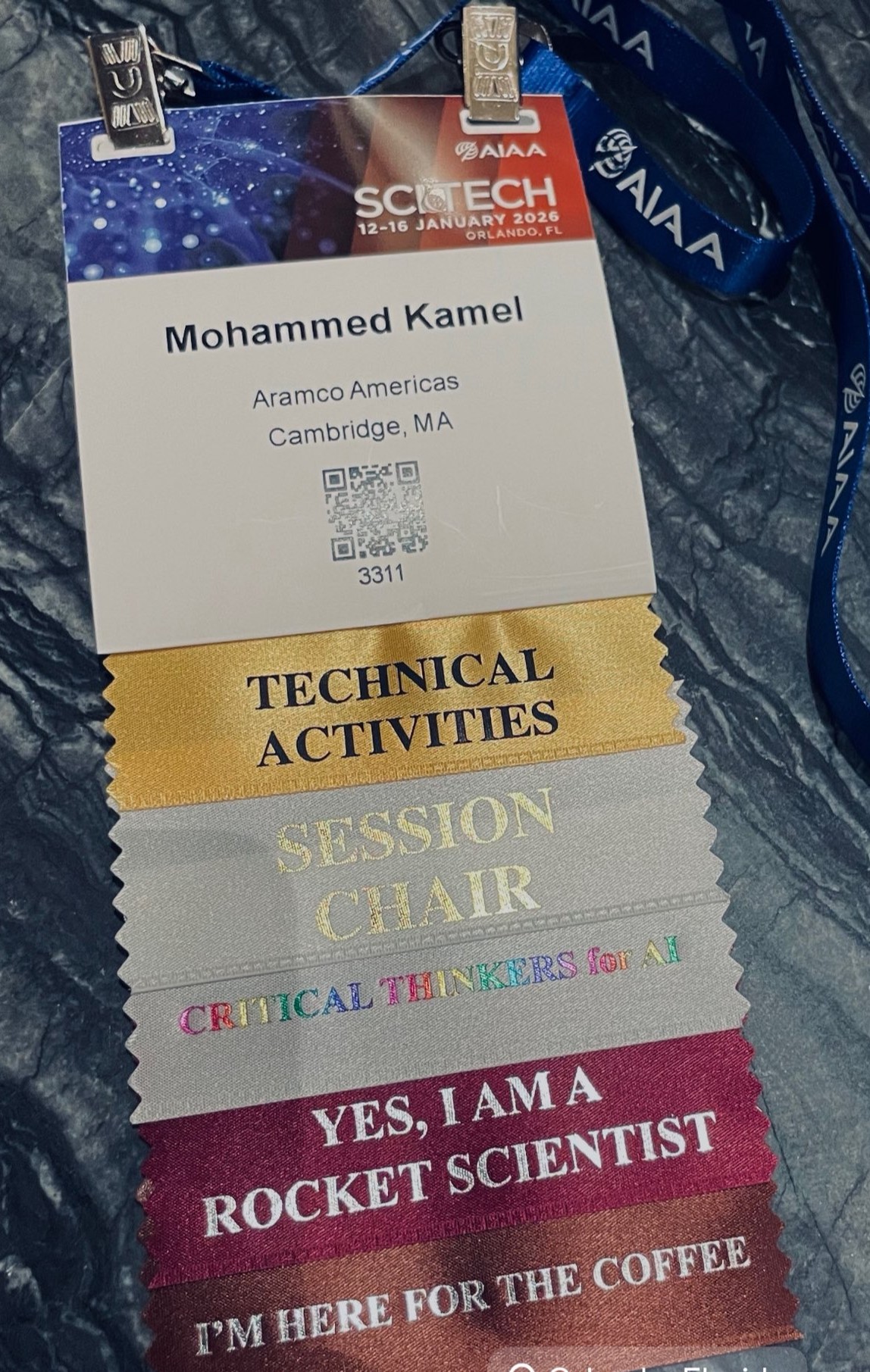
I was also fortunate to contribute to the technical activities of the Meshing, Visualization, and Computational Environments (MVCE) Technical Committee as Deputy Discipline Chair during AIAA SciTech 2026. These fields cover the tools and infrastructure used to prepare models before numerical solution, present their results afterward, and connect simulation tools and workflows.
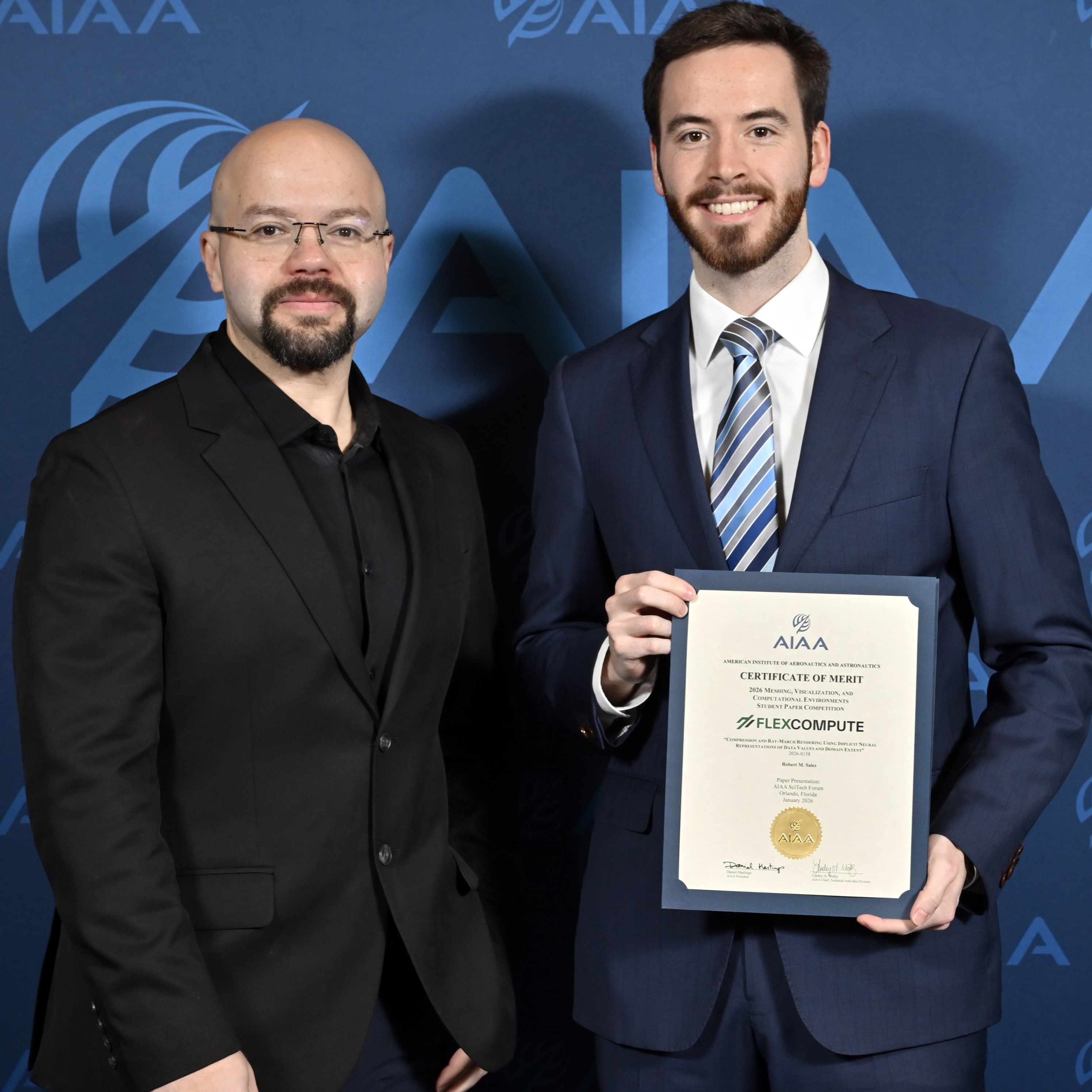
I benefited greatly from the guidance of the Discipline Chair, Yves-Marie Lefebvre, CTO of Tecplot, throughout the process. Working with him as Deputy Discipline Chair was a rich experience. Beyond editing and reviewing papers, chairing technical sessions, and evaluating student work, one of the most rewarding moments was recognizing Robert Sales, winner of the MVCE Best Student Paper award. Recognizing excellent student work does more than celebrate a research result; it encourages a researcher at the beginning of the journey to continue. I would also like to thank the MVCE TC members for their dedication and contributions to the success of the committee’s activities at SciTech 2026.
This experience reinforced for me the value of industry researchers participating actively in technical and research communities. Such participation benefits the scientific community while also contributing to the researcher’s scientific and professional development. It allows us to give back through industrial experience, remain connected to the latest developments, mentor students, celebrate their excellence, and build partnerships and teams for future research and industrial projects.
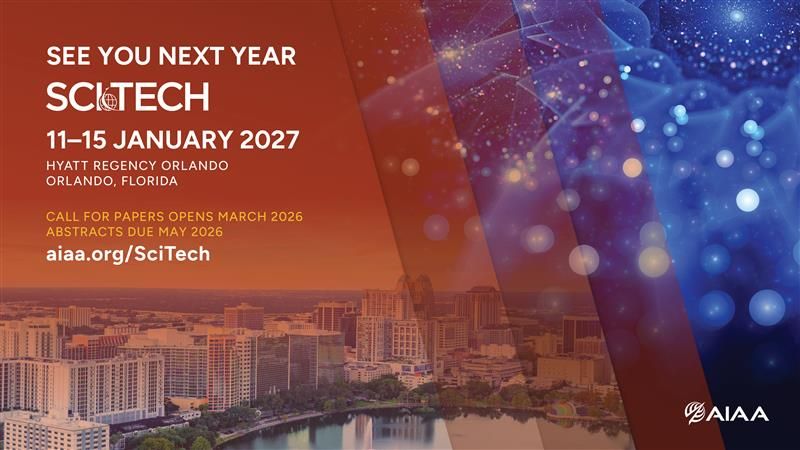
I am honored to continue serving the MVCE Technical Committee as Discipline Chair for AIAA SciTech 2027 and to collaborate with AIAA technical committee members on the call for papers for the upcoming conference.
This participation leads to an important point that I want to emphasize, particularly to encourage researchers in industry to share their work with academic communities and national laboratories. There is a common perception that serious research is confined to universities or government labs. Industry R&D is different from academic research, but it is not less rigorous. It balances theory, innovation, and the pursuit of answers to open-ended questions with real-world constraints: deadlines, available resources, intellectual property rights, the protection of proprietary knowledge in a competitive market, and the actual needs of users and the market.
These constraints do not reduce the value of research, but they change the meaning of success. It is not enough for an idea to be theoretically correct or to work once in a prototype. The research results and products built on them must meet demanding requirements for reproducibility, scalability, and quality assurance throughout research, design, development, and production. In other words, results should be repeatable, the solution should remain efficient as the problem grows, and the product should remain reliable under different operating conditions. This represents another level of rigor—one that balances theoretical depth with technical, economic, and operational considerations.
The point is not to place industry above academia, or academia above industry. Each operates with different goals, incentives, strengths, and constraints. Scientific and technical progress is strongest when universities, national laboratories, and industry interact—exchanging questions, methods, and experience while respecting intellectual property boundaries and the responsibilities of each institution.
In the end, these are reflections I wanted to share to enrich dialogue, exchange experiences, and open space for thought and discussion—especially among Arabic speakers. I hope they highlight the importance of the computational mindset and of building bridges among computation, scientific research, and industry. I also hope that a young researcher or engineer finds in them some encouragement to share their work, learn from the mistakes of those who came before them, and build their own path without waiting for a perfect moment that may never come.