<?xml version="1.0" encoding="utf-8"?><feed xmlns="http://www.w3.org/2005/Atom" xml:lang="en_US"><generator uri="https://jekyllrb.com/" version="3.10.0">Jekyll</generator><link href="https://www.mohammedkamel.com/atom.xml" rel="self" type="application/atom+xml" /><link href="https://www.mohammedkamel.com/" rel="alternate" type="text/html" hreflang="en_US" /><updated>2026-08-30T05:56:47+00:00</updated><id>https://www.mohammedkamel.com/atom.xml</id><title type="html">Mohammed Kamel</title><subtitle>Mohammed Kamel is a computational physicist and simulation architect specializing in high-performance computing, engineering software, and numerical simulation.</subtitle><author><name>Mohammed Kamel</name></author><entry xml:lang="ar"><title type="html">عودة إلى الجذور</title><link href="https://www.mohammedkamel.com/ar/blog/back-to-roots/" rel="alternate" type="text/html" title="عودة إلى الجذور" /><published>2026-05-03T00:00:00+00:00</published><updated>2026-05-03T00:00:00+00:00</updated><id>https://www.mohammedkamel.com/ar/blog/back-to-roots.rtl</id><content type="html" xml:base="https://www.mohammedkamel.com/ar/blog/back-to-roots/"><![CDATA[<p>غالبًا ما تأتي المفاجآت السعيدة حين نرضى ونتقبّل احتمال ألا تأتي أبدًا. لكنها، حين تأتي في صورة لقاء مع شخص قام بتدريسك أو إرشادك أو أسهم في تشكيل جزء من وعيك، أو حين ترى أمامك نسخة أصغر سنًا منك تحمل الأحلام والطموح نفسيهما، تصبح أكثر من مجرد لحظة سعيدة. فقد يكون ذلك اللقاء كل ما تحتاجه لتتذكر لماذا بدأت، ولماذا واصلت المثابرة في المسار الذي اخترته، حتى حين شعرت أنك تسير فيه وحيدًا، ورغم المصاعب والصدمات التي تحاول تشتيتك أو عرقلتك، ومع كل مسؤولياتنا تجاه من يمنحون حياتنا معنى.</p>

<p>هذه اللقاءات قليلة. وكان أحدثها في زيارتي الأخيرة إلى جامعة نوتردام، حين حضرت اجتماع المجلس الاستشاري الصناعي لقسم هندسة الطيران والفضاء. التقيت، كالمعتاد، عددًا من الأساتذة الذين قاموا بتدريسي أثناء الدكتوراه، لكنني كنت أبحث في كل مرة عن أستاذي ومشرفي، البروفيسور <strong>مين وانغ (Meng Wang)</strong>. كنت أذهب إلى مكتبه صباحًا أو ظهرًا ولا أجده. وفي هذه المرة تذكرت أنه، مثلي، محب للسهر والعمل ليلًا <strong>(Night Owl)</strong>. فقد كنا، بصفتنا مجموعة بحثية، نبدأ عملنا مساءً بعد انتهاء المحاضرات، تدريسًا أو حضورًا، ونواصل البحث بصفتنا حاسوبيين <strong>(Computationalists)</strong> حتى الساعات الأولى من صباح اليوم التالي. والحاسوبي هنا هو الباحث الذي يعتمد على النماذج الرياضية والخوارزميات والحواسيب لفهم الظواهر الفيزيائية. في تلك الساعات يكون المعمل قد هدأ بعد انصراف معظم التجريبيين <strong>(Experimentalists)</strong> العاملين في أنفاق الهواء <strong>(Wind Tunnels)</strong>.</p>

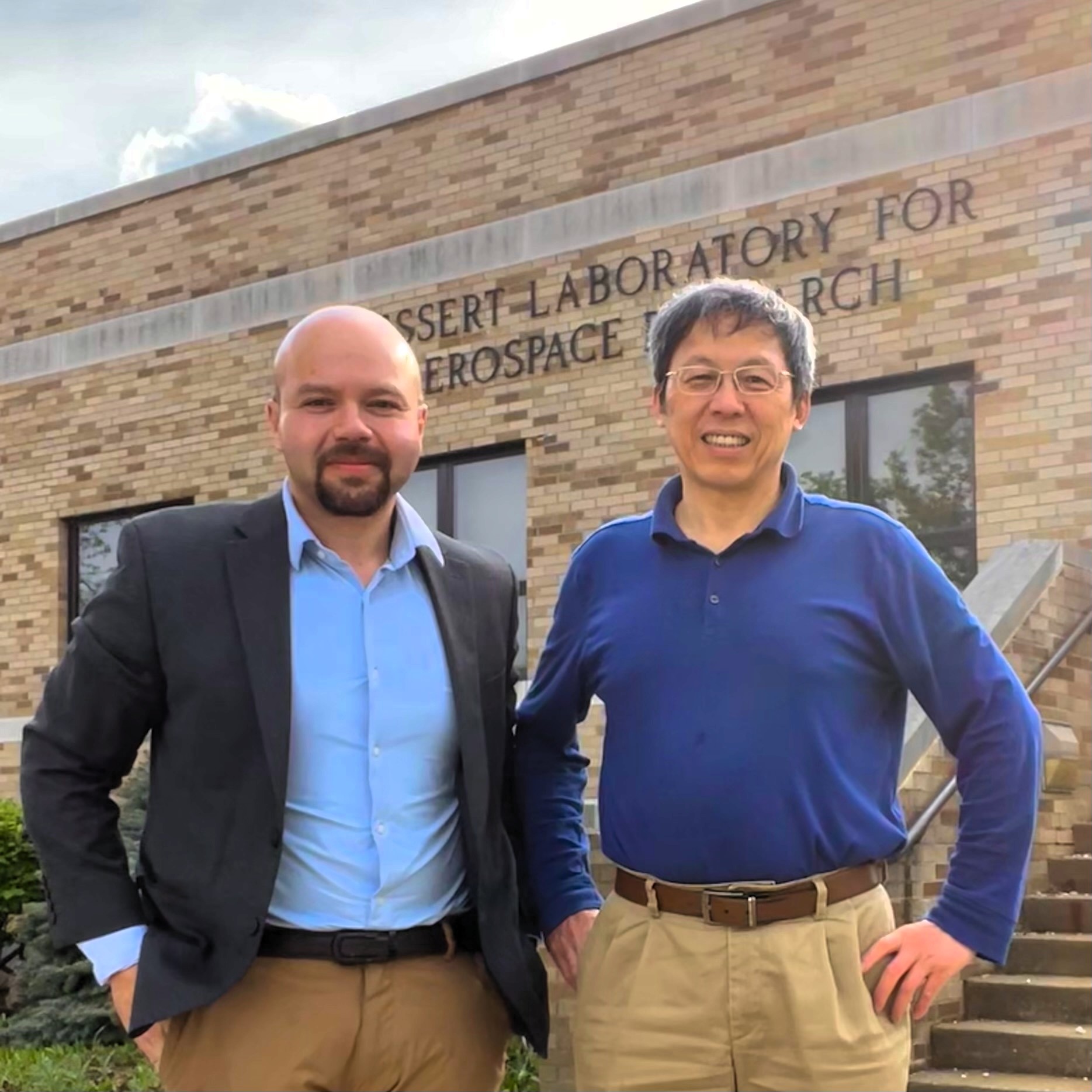
<p>اتصلت به عند السادسة مساءً، فوجدته فعلًا في مكتبه، يبدأ يومه بعد أن هدأ <strong>معمل هيسرت لأبحاث الطيران والفضاء (Hessert Laboratory for Aerospace Research)</strong>. التقينا وتحدثنا لعدة ساعات. بدأ حديثنا من يوم التحاقي بمجموعته البحثية، ثم انتقل إلى عملي بعد مناقشة الدكتوراه في البحوث والتطوير في الحوسبة والمحاكاة لدى <strong>أنسيس (Ansys)</strong>، وصولًا إلى انتقالي الأخير إلى مجال الطاقة ومحاكاة مكامن النفط والغاز وطرق استخلاصها وإنتاجيتها <strong>(Reservoir Simulation &amp; Oil Recovery and Production)</strong>.</p>

<figure class="post-figure">
  <img class="post-image" src="/assets/posts/2026-05-03-back-to-roots/with-wang.jpeg" alt="محمد كامل والبروفيسور مين وانغ أمام معمل هيسرت لأبحاث الطيران والفضاء في جامعة نوتردام" loading="eager" decoding="async" fetchpriority="high" width="1869" height="1869" />
  
    <figcaption class="post-image-caption">مع البروفيسور مين وانغ أمام معمل هيسرت لأبحاث الطيران والفضاء في جامعة نوتردام.</figcaption>
  
</figure>

<p>توقفنا طويلًا عند السؤال الذي يربط هذه المجالات: كيف يمكن للتقنيات الحسابية والرياضيات المتقدمة، المستخدمة في محاكاة ثوانٍ أو دقائق من سريان الهواء والموائع حول أنظمة الطائرات والصواريخ صغيرة ومتوسطة الحجم، وفي نطاقات لا تتجاوز بضعة أمتار داخل طبقات الجو العليا، أن تُستخدم أيضًا في محاكاة تكوّن الهيدروكربونات في الأحواض الرسوبية <strong>(Sedimentary Basins)</strong>، وهجرتها عبر طبقات الأرض المسامية على أعماق تبلغ آلاف الأمتار، وعلى امتداد آلاف الكيلومترات، وخلال مقاييس زمنية جيولوجية طويلة؟</p>

<p>ثم انتقلنا إلى أوجه التشابه والاختلاف في بناء المحاكاة الرقمية نفسها: من الشبكات العددية <strong>(Meshing)</strong>، إلى تقسيم المجال والتوازي <strong>(Domain Decomposition &amp; Parallelization)</strong>، ثم إلى اختلاف معادلات السريان. ففي محاكاة الهواء والسريان الحر ننطلق عادةً من الصورة الكلاسيكية لمعادلات نافيير–ستوكس <strong>(Navier–Stokes Equations)</strong>، بينما نستخدم في الأوساط المسامية قانون دارسي <strong>(Darcy’s Law)</strong> لوصف سريان النفط والغاز. وتتغير تبعًا لذلك خصائص الأنظمة الخطية والمصفوفات وطرق حلها، لأن اختلاف المقاييس المكانية والزمنية بين المسألتين ليس تفصيلًا ثانويًا؛ بل يحدد كيف نبني النموذج والخوارزمية والحل الحاسوبي كله.</p>

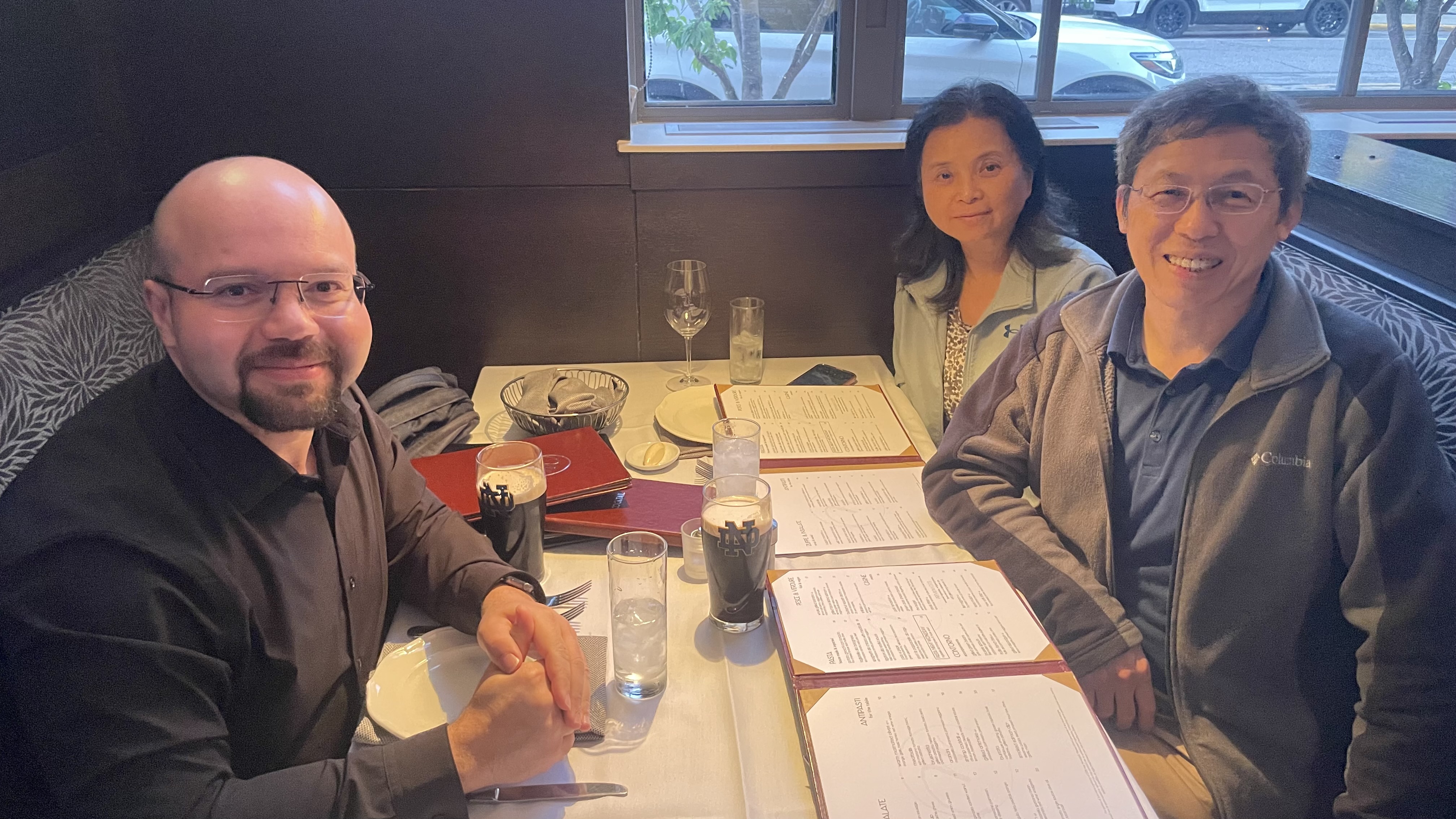
<p>لكن هذا لم يكن نهاية حوارنا. فقد دعاني إلى العشاء في اليوم التالي، بعد أن أنهيت مهام زيارتي، برفقة زوجته في مطعم إيطالي. وهناك بدأ يشاركني خبرات حياتية لم يشاركها معي من قبل. كنت قد اعتدته مهنيًا شديد الصرامة، وهذه إحدى الصفات التي تعلمتها منه. ولأول مرة تحدثنا عن شجرة عائلتنا الأكاديمية. فعلى الرغم من أنه أبي الأكاديمي، لم نجد خلال دراستي وقتًا للحديث عن ذلك؛ إذ كنا منشغلين بتحليل النتائج، وكتابة طلبات المنح للعمل على الحواسيب الفائقة، وإعداد التقارير للجهات المانحة، وكتابة الأوراق البحثية، والاستعداد للمؤتمرات.</p>

<figure class="post-figure">
  <img class="post-image" src="/assets/posts/2026-05-03-back-to-roots/with-wang-restaurant.jpeg" alt="محمد كامل مع البروفيسور مين وانغ وزوجته خلال العشاء في أثناء زيارة جامعة نوتردام" loading="lazy" decoding="async" width="4032" height="2268" />
  
    <figcaption class="post-image-caption">خلال العشاء مع البروفيسور مين وانغ وزوجته في أثناء زيارتي إلى جامعة نوتردام.</figcaption>
  
</figure>

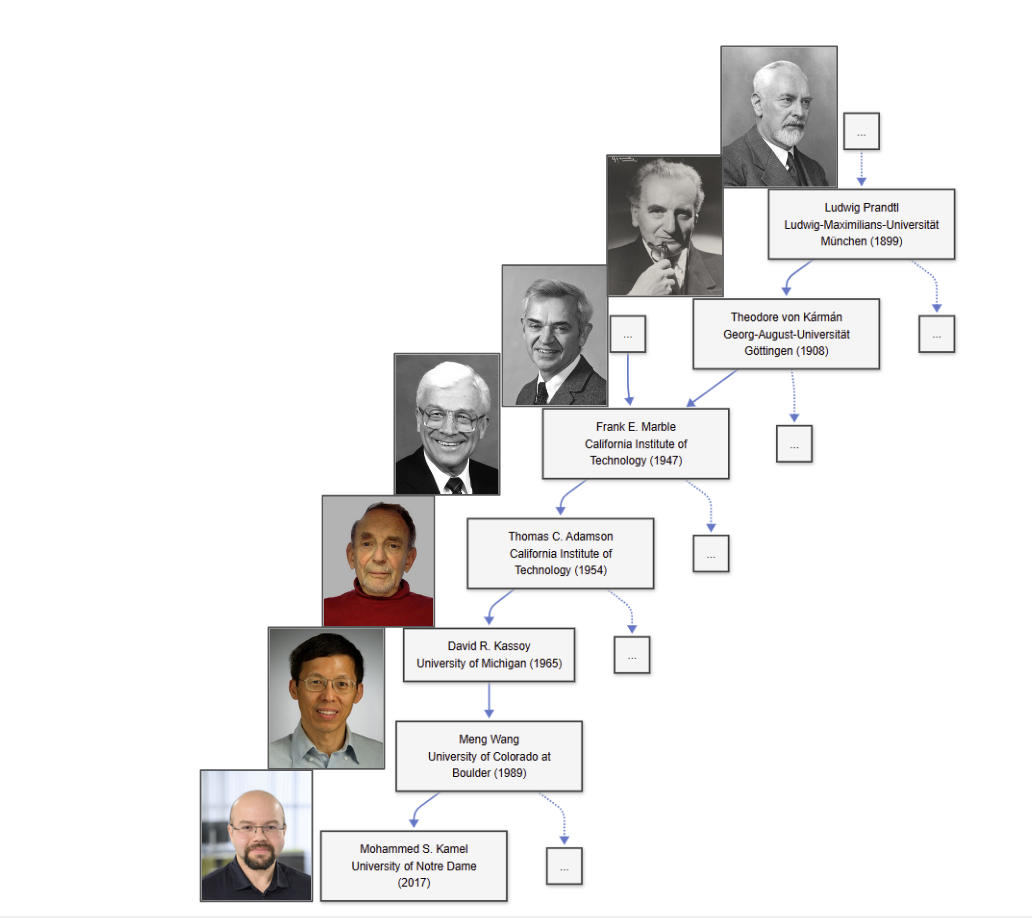
<p>أراني يومها شجرة عائلتي الأكاديمية والجذور التي أنتمي إليها. و«الأب الأكاديمي» ليس نسبًا عائليًا، بل هو المشرف الذي تتلمذت على يديه؛ وعند تتبّع مشرفه ثم مشرف مشرفه، تتكوّن سلسلة ممتدة من التعلّم المباشر ونقل المعرفة بين أجيال الباحثين.</p>

<p>ومن خلال هذا السند المتصل والتتلمذ المباشر، وجدت أن شجرتي تمتد عبر البروفيسور مين وانغ إلى <strong>ديفيد كاسوي (David R. Kassoy)</strong>، ثم <strong>توماس آدمسون (Thomas C. Adamson)</strong>، ثم <strong>فرانك ماربل (Frank E. Marble)</strong>، وصولًا إلى اثنين من كبار رواد ميكانيكا الموائع والطيران: <strong>تيودور فون كارمن (Theodor von Kármán)</strong> و<strong>لودفيج براندل (Ludwig Prandtl)</strong>. وقد قادني هذا الاكتشاف إلى مشاعر مختلطة من الفرح والفخر والمسؤولية والأمل. ووفق امتداد هذه الشجرة الأكاديمية، فأنا واحد من 4635 من أحفاد براندل الأكاديميين، وواحد من 1743 من أحفاد فون كارمن الأكاديميين.</p>

<figure class="post-figure">
  <img class="post-image" src="/assets/posts/2026-05-03-back-to-roots/tree.png" alt="شجرة العائلة الأكاديمية الممتدة من لودفيج براندل وتيودور فون كارمن إلى مين وانغ ومحمد كامل" loading="lazy" decoding="async" width="1032" height="918" />
  
    <figcaption class="post-image-caption">شجرة العائلة الأكاديمية الممتدة عبر براندل وفون كارمن وماربل وآدمسون وكاسوي إلى البروفيسور مين وانغ.</figcaption>
  
</figure>

<p>كان <strong>براندل (Prandtl)</strong> من مؤسسي علم ميكانيكا الموائع الحديثة <strong>(Fluid Mechanics)</strong> من خلال نظرية الطبقة الحدّية <strong>(Boundary Layer Theory)</strong>. والطبقة الحدّية هي المنطقة الرقيقة الملاصقة للسطح، حيث يتغير السريان سريعًا بسبب تأثير اللزوجة والاحتكاك. وقد أتاحت هذه النظرية فهمًا أدق للجريان حول الأجنحة، وكيف ينتقل من الشكل السلس الصفائحي <strong>(Laminar Flows)</strong> إلى سريان دوامي عشوائي مضطرب <strong>(Turbulent Flows)</strong>، وكيف يمكن لخشونة السطح المجهرية وغيرها من الاضطرابات أن تسهم في هذا الانتقال على سرعات طيران مختلفة. وخلال الحرب العالمية الثانية، استُخدمت نتائج من أبحاثه في تحسين التصميمات الهوائية للطائرات الألمانية، رغم أن دوره كان علميًا بالأساس، لا تنفيذًا عسكريًا مباشرًا.</p>

<p>وعلى الجانب الآخر من المحيط الأطلسي، أسهم <strong>تيودور فون كارمن (von Kármán)</strong> في تطوير فهم ديناميكا الدوامات <strong>(Vortex Dynamics)</strong> وعدم الاستقرار في السريان <strong>(Flow Instability)</strong>، وكان له دور محوري في ربط الفيزياء بالتطبيقات الهندسية في الطيران والصواريخ. وقد مهّد هذا الربط لتطور المحاكاة الحسابية للجريان المضطرب، وفهم الدوامات المتكوّنة في السريان المتذيّل للمركبات المتحركة، وكيف تنتقل الطاقة من الدوامات الكبرى إلى أحجام أصغر حتى تتبدد فيما يُعرف بشلال الطاقة <strong>(Energy Cascade)</strong>.</p>

<p>وكان فون كارمن كذلك من المؤسسين الأوائل لمختبر الدفع النفاث <strong>(Jet Propulsion Laboratory — JPL)</strong>، حيث دعم أبحاث الدفع الصاروخي خلال الحرب العالمية الثانية، وأسهم بذلك في تأسيس بنية علمية قامت عليها برامج فضاء لاحقة. وتحدثت مع أستاذي عن اثنين من أبرز من تعاونوا مع فون كارمن في نشأة هذا المختبر: <strong>فرانك ماربل (Frank Marble)</strong>، جدي الأكاديمي والبروفيسور في معهد كاليفورنيا للتقنية <strong>(Caltech)</strong>، وصديقه العزيز <strong>هسيوي-شن تسين (Hsue-shen Tsien)</strong>. لكن المكارثية فرّقت بينهما، حتى قرر تسين العودة إلى الصين، حيث أصبح له لاحقًا دور مؤسس في برنامجها للطيران والفضاء. ثم اجتمع الصديقان مرة أخرى في الصين في ثمانينيات القرن الماضي.</p>

<p>وكلما امتد الحديث، غمرتني مشاعر الفخر والسعادة بهذه المفاجأة وبهذا الاتصال العلمي المباشر مع أولئك الرواد. لم أكن مهتمًا أثناء دراستي بالبحث عن هذا النسب الأكاديمي أو السؤال عنه، لتمسكي ببيت حسان بن ثابت:</p>

<blockquote>
  <p>ليس الفتى من قال كان أبي<br />
إن الفتى من قال ها أنا ذا</p>
</blockquote>

<p>فالنسب العلمي لا يمنح صاحبه إنجازًا جاهزًا، لكنه يذكّره بحجم الأمانة التي يحملها. ومن هنا نبع داخلي شعور قوي بالمسؤولية تجاه ما ينبغي أن نقدمه للمجتمع العلمي والهندسي، وكيف ننقل خبراتنا إلى زملائنا من الأجيال الجديدة الصاعدة، وكيف نوجّه طاقاتنا مستقبلًا نحو إيجاد حلول جذرية لمسائل ميكانيكا الموائع المضطربة التي طالما عجز المجتمع العلمي عن فهمها بعمق، أو اعتاد التعامل معها من دون البحث الكافي عن زوايا بديلة لفهمها.</p>

<p>فمنذ سبعينيات القرن الماضي، اتجه كثير من الاستثمار والإبداع مباشرةً إلى الطرق الحسابية في ميكانيكا الموائع، بهدف مواكبة السباق الصناعي والعسكري. وكان لهذا التوجه فضل في تكوين جيش من عباقرة الكميين <strong>(Quants)</strong> الذين أحدثوا طفرة في الطرق العددية ومعالجة البيانات الضخمة. ولم يقتصر أثرهم على ميكانيكا الموائع في الطيران والفضاء والطاقة والأرصاد الجوية ودراسة المجرات والنجوم، بل امتد إلى محاكاة النظم الفوضوية، مثل أسواق الأسهم وصناديق التحوط <strong>(Hedge Funds)</strong> والتكنولوجيا المالية <strong>(FinTech)</strong>، وإلى الحوسبة عالية الأداء <strong>(High-Performance Computing)</strong> وتعلّم الآلة والذكاء الصناعي <strong>(AI/ML)</strong>. وما يجمع هذه المجالات هو محاولة تحويل نظام معقّد إلى نموذج كمي يمكن اختباره وتحسينه واتخاذ القرار على أساسه.</p>

<p>ولهذا، وتماشيًا مع ذلك الاتجاه الواقعي والبراغماتي لحل المشكلات المعقّدة على مقاييس هندسية وصناعية حقيقية، كان حلمي أن ألتحق بالصناعة مباشرةً بدلًا من الأكاديميا بعد الدكتوراه. أردت أن يكون لي تأثير أكثر وقعًا في ميكانيكا الموائع خاصةً، وفي المحاكاة الفيزيائية عامةً، وأن أؤسس لنفسي مسارًا مباشرًا في الحوسبة عالية الأداء وصناعة الطيران والفضاء من خلال عملي في واحدة من أكبر شركات المحاكاة الرقمية للمهندسين في العالم، وهي أنسيس <strong>(Ansys)</strong>.</p>

<p>كان القرار متوازنًا اقتصاديًا وعلميًا وعمليًا، رغم العقبات الكثيرة التي تواجه العاملين في الصناعة عند نشر أبحاثهم. فمن هذه العقبات قيود الملكية الفكرية، وصعوبة الإقناع بتسجيل الاختراعات الرقمية، ومعاملة كثير منها بوصفه سرًا تجاريًا <strong>(Trade Secret)</strong> لتفادي التكلفة المرتفعة لبراءات الاختراع، خصوصًا حين يصعب على المنافسين إعادة اكتشاف التقنية أو هندستها عكسيًا. ولهذا قد ينجز الباحث الصناعي عملًا عميقًا ومؤثرًا لا يظهر كله في الأوراق المنشورة.</p>

<p>ومن أمثلة المسائل التي ما زالت مفتوحة: السريان المضطرب على الأسطح. فعلى الرغم من بساطة وصفه الظاهري، يتميز هذا السريان بتنظيم بالغ التعقيد للدوامات. تبدأ بعض البنى من دوامات مجهرية قرب السطح، ثم تتناغم وتتفاعل لتشكّل دوامات أكبر ممتدة مع اتجاه التيار، وصولًا إلى ما يسمى بالهياكل العملاقة <strong>(Superstructures)</strong>. ومن هنا تظهر فكرة تسلسل تكوّن الدوامات العكسي، من الأصغر إلى الأكبر. والمقصود هنا ليس أن شلال الطاقة في الدوامات الحرة ينعكس ببساطة، بل أن تنظيم البنى المتماسكة قرب السطح يختلف عن الصورة المبسطة لانتقال الطاقة من الدوامات الكبرى إلى الصغرى.</p>

<p>ولهذا يُعد السريان المضطرب على الأسطح من أكثر الحالات تحديًا لمن يعملون على نمذجته. وفي ظل غياب نموذج رياضي مغلق يصف كل تفاصيله، تُترك جوانب كثيرة منه للمحاكاة الرقمية الدقيقة. لكن هذه المحاكاة نفسها تحتاج إلى إعدادات صارمة حتى تنتج نتائج دقيقة ومتوافقة مع القياسات المعملية، وربما أشد صرامة من كثير من حالات السريان الدوامي الحر.</p>

<p>وكانت رسالتي للدكتوراه من أوائل الأعمال التي قدمت إعدادات ناجحة للمحاكاة الرقمية والنماذج الحسابية للاضطراب <strong>(Turbulence Modeling)</strong> للسريان المضطرب على الأسطح في ظروف طيران حقيقية بسرعات عالية. كما تناولت توقّع أثر هذا السريان في المجالات الكهرومغناطيسية، مثل الليزر عالي الطاقة، عند انتقالها خلاله، مع توافق قوي مع القياسات المعملية. ومع ذلك، ما زلت أجدني أحاول أن أفهم، أو أبحث عمن يقنعني بفهمه، للطبيعة الجامعة أو النظرية الجامعة للأشكال المختلفة من السريان المضطرب.</p>

<p>لكنني أظن أن الفرصة ما زالت قائمة، خصوصًا بعد التطور في الإمكانات الحوسبية والذكاء الصناعي والتعلّم العصبي العميق. فقد تساعدنا هذه الأدوات على فهم الفيزياء الكامنة في تكوّن الدوامات واندثارها في الأنواع المختلفة من السريان المضطرب، وعلى دراسة السريان بوصفه سريانًا غير مستقر <strong>(Unstable Flow)</strong> يمكن النظر إلى بعض جوانبه من منظور استمثالي <strong>(Optimization Perspective)</strong>. ويعني هذا المنظور البحث عن الحالة أو التمثيل الذي يفسر سلوك النظام بأفضل صورة في ظل قيود محددة، وخصوصًا في سياق النمذجة المعتمدة على البيانات.</p>

<p>لكن الاستفادة من البيانات لا تعني الاستغناء عن الأساس الحسابي <strong>(Computational Basis)</strong> القائم على المعادلات التفاضلية. فالتحدي الحقيقي هو بناء جسر بينهما، سواء كنا ندرس سريانًا حدّيًا طبقيًا <strong>(Boundary Layer Flow)</strong> على أسطح الأجنحة، أو سريان الدوامات المتذيّلة لأجسام المركبات <strong>(Vortex Shedding Flows)</strong>. وبرغم عملي في الصناعة، أؤمن بأنني سأستطيع، على امتداد تلك الشجرة الأكاديمية، أن أسهم بطريقة أو بأخرى، ولو بقدر بسيط، في حل مسائل تمس مئات التطبيقات العلمية والهندسية.</p>

<hr />

<p>وأؤمن أن المرحلة القادمة لن تكون مجرد تطور في الحوسبة، بل قد تعيد تعريف الطريقة التي نفهم بها الفيزياء نفسها. وربما لا يكون دوري أن أظل مجرد امتداد لهذه الشجرة الأكاديمية، بل أن أسهم، ولو بجزء بسيط، في إضافة فرع جديد إليها؛ فرع يربط بين الفيزياء والحوسبة والذكاء الصناعي، ويساعد في حل ما استعصى فهمه لعقود.</p>]]></content><author><name>Mohammed Kamel</name></author><category term="academic-genealogy" /><category term="fluid-mechanics" /><category term="turbulence" /><category term="computation" /><category term="mentorship" /><summary type="html"><![CDATA[تأملات في الإرشاد العلمي والجذور الأكاديمية والسريان المضطرب، وفي بناء جسر بين الفيزياء والحوسبة والذكاء الصناعي.]]></summary><media:thumbnail xmlns:media="http://search.yahoo.com/mrss/" url="https://www.mohammedkamel.com/assets/files/photos/mxkamel-avatar.png" /><media:content medium="image" url="https://www.mohammedkamel.com/assets/files/photos/mxkamel-avatar.png" xmlns:media="http://search.yahoo.com/mrss/" /></entry><entry xml:lang="en"><title type="html">Back to My Roots</title><link href="https://www.mohammedkamel.com/blog/back-to-roots/" rel="alternate" type="text/html" title="Back to My Roots" /><published>2026-05-03T00:00:00+00:00</published><updated>2026-05-03T00:00:00+00:00</updated><id>https://www.mohammedkamel.com/blog/back-to-roots</id><content type="html" xml:base="https://www.mohammedkamel.com/blog/back-to-roots/"><![CDATA[<p>Happy surprises often arrive only after we have made peace with the possibility that they may never come. When one arrives through an encounter with someone who taught you, guided you, or helped shape part of your awareness—or through meeting a younger version of yourself carrying the same dreams and ambitions—it becomes more than a pleasant moment. Sometimes, that encounter is exactly what you need to remember why you started, and why you continued along the path you chose even when it felt lonely, despite the difficulties and shocks that tried to distract or obstruct you, and amid all our responsibilities toward the people who give our lives meaning.</p>

<p>Such encounters are rare. The most recent came during my latest visit to the University of Notre Dame, where I was attending a meeting of the Industrial Advisory Council for the Department of Aerospace and Mechanical Engineering. As usual, I met several professors who had taught me during my Ph.D. Yet each time, I found myself looking for my advisor, Professor <strong>Meng Wang</strong>. I would visit his office in the morning or around noon and find that he was not there. This time, I remembered that he is, like me, a <strong>night owl</strong>. As a research group, we often began our work in the evening after classes—whether teaching or attending them—and continued as <strong>computationalists</strong> into the early hours of the next morning. A computationalist, in this context, is a researcher who uses mathematical models, algorithms, and computers to understand physical phenomena. By then, the laboratory would be quiet, after most of the <strong>experimentalists</strong> working in the <strong>wind tunnels</strong> had left.</p>

<p>I called him at six in the evening and found him in his office, effectively beginning his day after the <strong>Hessert Laboratory for Aerospace Research</strong> had settled down. We met and talked for several hours. Our conversation began with the day I joined his research group, then moved through my transition after defending my Ph.D. to computational modeling and simulation R&amp;D at <strong>Ansys</strong>, and finally to my more recent move into energy, reservoir simulation, and oil recovery and production.</p>

<figure class="post-figure">
  <img class="post-image" src="/assets/posts/2026-05-03-back-to-roots/with-wang.jpeg" alt="Mohammed Kamel and Professor Meng Wang outside the Hessert Laboratory for Aerospace Research at the University of Notre Dame" loading="eager" decoding="async" fetchpriority="high" width="1869" height="1869" />
  
    <figcaption class="post-image-caption">With Professor Meng Wang outside the Hessert Laboratory for Aerospace Research at the University of Notre Dame.</figcaption>
  
</figure>

<p>We spent considerable time on the question connecting these fields: How can the computational techniques and advanced mathematics used to simulate seconds or minutes of airflow and fluid motion around small- and medium-scale aircraft and rocket systems—domains measured in meters in the upper atmosphere—also be used to simulate hydrocarbon formation in <strong>sedimentary basins</strong>, migration through porous formations thousands of meters below the surface, across distances of thousands of kilometers, and over long geological timescales?</p>

<p>From there, we examined the similarities and differences in constructing the simulations themselves: from <strong>meshing</strong>, to <strong>domain decomposition and parallelization</strong>, and then to the governing flow equations. Simulations of airflow and free-fluid motion commonly begin with the classical <strong>Navier–Stokes equations</strong>, whereas flow through porous media is described using <strong>Darcy’s law</strong> for oil and gas reservoir simulation. The resulting linear systems, matrices, and solution methods also differ. The spatial and temporal scales separating the two problems are not secondary details; they influence how the entire model, algorithm, and computational solution must be constructed.</p>

<p>That was not the end of our conversation. He invited me to dinner with him and his wife the following evening, after I had completed the responsibilities of my visit. There, at an Italian restaurant, he began sharing life experiences that he had never discussed with me before. I had always known him as exceptionally rigorous in professional matters, and that rigor was one of the qualities I learned from him. For the first time, we talked about our academic family tree. Although he is my academic father, we had never found time during my graduate studies to discuss it. We had been occupied with analyzing results, writing proposals for access to supercomputing resources, preparing reports for sponsors, writing research papers, and getting ready for conferences.</p>

<figure class="post-figure">
  <img class="post-image" src="/assets/posts/2026-05-03-back-to-roots/with-wang-restaurant.jpeg" alt="Mohammed Kamel having dinner with Professor Meng Wang and his wife during a visit to the University of Notre Dame" loading="lazy" decoding="async" width="4032" height="2268" />
  
    <figcaption class="post-image-caption">At dinner with Professor Meng Wang and his wife during my visit to the University of Notre Dame.</figcaption>
  
</figure>

<p>That evening, he showed me my academic family tree and the roots to which I belong. An “academic father” is not a family relation; it is the advisor under whom a researcher trains. Following that advisor’s advisor, and then the advisor before them, reveals an extended chain through which knowledge and research traditions pass directly from one generation to the next.</p>

<p>Through that continuous chain of direct mentorship, I found that my lineage extends from Professor Meng Wang through <strong>David R. Kassoy</strong>, <strong>Thomas C. Adamson</strong>, and <strong>Frank E. Marble</strong>, and eventually reaches two of the great pioneers of fluid mechanics and aeronautics: <strong>Theodor von Kármán</strong> and <strong>Ludwig Prandtl</strong>. The discovery brought a mixture of joy, pride, responsibility, and hope. Within the extended academic genealogy, I am one of 4,635 academic descendants of Prandtl and one of 1,743 academic descendants of von Kármán.</p>

<figure class="post-figure">
  <img class="post-image" src="/assets/posts/2026-05-03-back-to-roots/tree.png" alt="Academic family tree extending from Ludwig Prandtl and Theodor von Kármán to Meng Wang and Mohammed Kamel" loading="lazy" decoding="async" width="1032" height="918" />
  
    <figcaption class="post-image-caption">The academic lineage through Prandtl, von Kármán, Marble, Adamson, and Kassoy to Professor Meng Wang.</figcaption>
  
</figure>

<p><strong>Prandtl</strong> was one of the founders of modern <strong>fluid mechanics</strong>, particularly through <strong>boundary-layer theory</strong>. The boundary layer is the thin region adjacent to a surface where the flow changes rapidly because of viscosity and friction. His theory made it possible to understand airflow around wings more precisely, including how it transitions from smooth <strong>laminar flow</strong> to irregular, vortical <strong>turbulent flow</strong>, and how microscopic surface roughness and other disturbances can contribute to that transition at different flight speeds. During World War II, results from his research were used to improve the aerodynamic design of German aircraft, although his own role was fundamentally scientific rather than one of direct military execution.</p>

<p>Across the Atlantic, <strong>Theodor von Kármán</strong> advanced our understanding of <strong>vortex dynamics</strong> and <strong>flow instability</strong>, and played a central role in connecting physics with engineering applications in aviation and rocketry. That connection helped prepare the ground for computational simulation of turbulent flow and for understanding the vortices formed in the wakes of moving vehicles, including how energy passes from large eddies to progressively smaller scales until it dissipates through what is known as the <strong>energy cascade</strong>.</p>

<p>Von Kármán was also among the early founders of the <strong>Jet Propulsion Laboratory (JPL)</strong>. He supported rocket-propulsion research during World War II and helped establish a scientific foundation on which later space programs would build. My advisor and I spoke about two of von Kármán’s most distinguished collaborators in the laboratory’s early history: <strong>Frank Marble</strong>, my academic grandfather and a professor at the <strong>California Institute of Technology (Caltech)</strong>, and his close friend <strong>Hsue-shen Tsien</strong>. McCarthyism separated them, and Tsien eventually returned to China, where he later played a foundational role in the country’s aerospace program. The two friends met again in China in the 1980s.</p>

<p>As the conversation continued, I became immersed in a sense of pride and happiness at the surprise and at this direct scholarly connection to those pioneers. During my studies, I had never been particularly interested in tracing or asking about that lineage. I had held closely to a verse attributed to Hassan ibn Thabit:</p>

<blockquote>
  <p>A young man is not one who says, “My father was.”<br />
A young man is one who says, “Here I am.”</p>
</blockquote>

<p>Academic lineage does not hand anyone an accomplishment. It does, however, remind us of the responsibility we inherit. That realization awakened in me a strong sense of responsibility toward what we should contribute to the scientific and engineering community, how we transfer our experience to colleagues from rising generations, and how we direct our future energy toward finding fundamental solutions to problems in turbulent fluid mechanics that the scientific community has long struggled to understand deeply—or has grown accustomed to treating without searching hard enough for alternative perspectives.</p>

<p>Since the 1970s, major investment and innovation have moved directly into computational methods for fluid mechanics in response to industrial and military competition. That movement helped produce an army of brilliant quantitative researchers, or <strong>quants</strong>, who transformed numerical methods and large-scale data processing. Their influence did not remain confined to fluid mechanics in aerospace, energy, weather prediction, galaxies, and stars. It extended to the simulation of chaotic systems such as stock markets, <strong>hedge funds</strong>, and <strong>FinTech</strong>, as well as to <strong>high-performance computing</strong> and <strong>artificial intelligence and machine learning (AI/ML)</strong>. What connects these fields is the effort to convert a complex system into a quantitative model that can be tested, improved, and used to support decisions.</p>

<p>In line with that realistic and pragmatic direction—solving complex problems at genuine engineering and industrial scales—my goal after the Ph.D. was to enter industry directly rather than academia. I wanted to create a more immediate impact in fluid mechanics in particular and physical simulation more broadly, while establishing a direct path for myself in high-performance computing and aerospace through one of the world’s largest engineering simulation software companies, <strong>Ansys</strong>.</p>

<p>The decision was balanced economically, scientifically, and practically, despite the many obstacles industrial researchers face when publishing their work. These include intellectual-property restrictions, the difficulty of making the case for patenting digital inventions, and the decision to retain many innovations as <strong>trade secrets</strong> to avoid the high cost of patents—especially when the technology would be difficult for competitors to rediscover or reverse-engineer. An industrial researcher may therefore complete deep and consequential work that cannot appear fully in the published literature.</p>

<p>One example of a problem that remains open is turbulent flow over surfaces. Despite the apparent simplicity of its description, the organization of its vortices is remarkably complex. Some structures begin as microscopic eddies near the surface, then align and interact to form larger structures extending in the streamwise direction and eventually forming what are known as <strong>superstructures</strong>. This leads to an inverse sequence of vortex organization, from smaller structures toward larger ones. It does not mean that the energy cascade in free turbulence simply reverses; rather, the organization of coherent structures near a surface differs from the simplified picture of energy passing only from large eddies to smaller ones.</p>

<p>For this reason, turbulent flow over surfaces remains one of the most challenging cases for those who model it. In the absence of a closed mathematical model that describes every detail, many aspects are left to high-fidelity numerical simulation. Yet those simulations require rigorous setup to produce accurate results consistent with laboratory measurements—often more rigorous than many free-shear turbulent-flow cases.</p>

<p>My doctoral dissertation was among the early works to provide successful numerical-simulation configurations and computational <strong>turbulence models</strong> for high-speed, wall-bounded turbulent flow under realistic flight conditions. It also predicted how this flow affects electromagnetic fields, such as high-energy lasers propagating through it, with strong agreement against laboratory measurements. Even so, I still find myself trying to understand—or looking for someone who can convince me that they understand—the unifying nature or theory behind the different forms of turbulent flow.</p>

<p>I believe an opportunity still exists, particularly after the advances in computing capabilities, artificial intelligence, and deep neural learning. These tools may help us understand the physics governing the formation and disappearance of vortices across different types of turbulent flow. They may also help us study turbulence as an <strong>unstable flow</strong> whose behavior can, in part, be approached from an <strong>optimization perspective</strong>, especially in data-driven modeling. This perspective asks which state or representation best explains a system’s behavior under a defined set of constraints.</p>

<p>Using data, however, does not mean abandoning the <strong>computational basis</strong> grounded in differential equations. The real challenge is to build a bridge between them, whether the problem is a <strong>boundary-layer flow</strong> over a wing or <strong>vortex-shedding flows</strong> in the wakes of vehicles. Although I work in industry, I believe that somewhere along the extension of this academic tree, I will be able—in one way or another, and even in a small measure—to contribute to solving problems that affect hundreds of scientific and engineering applications.</p>

<hr />

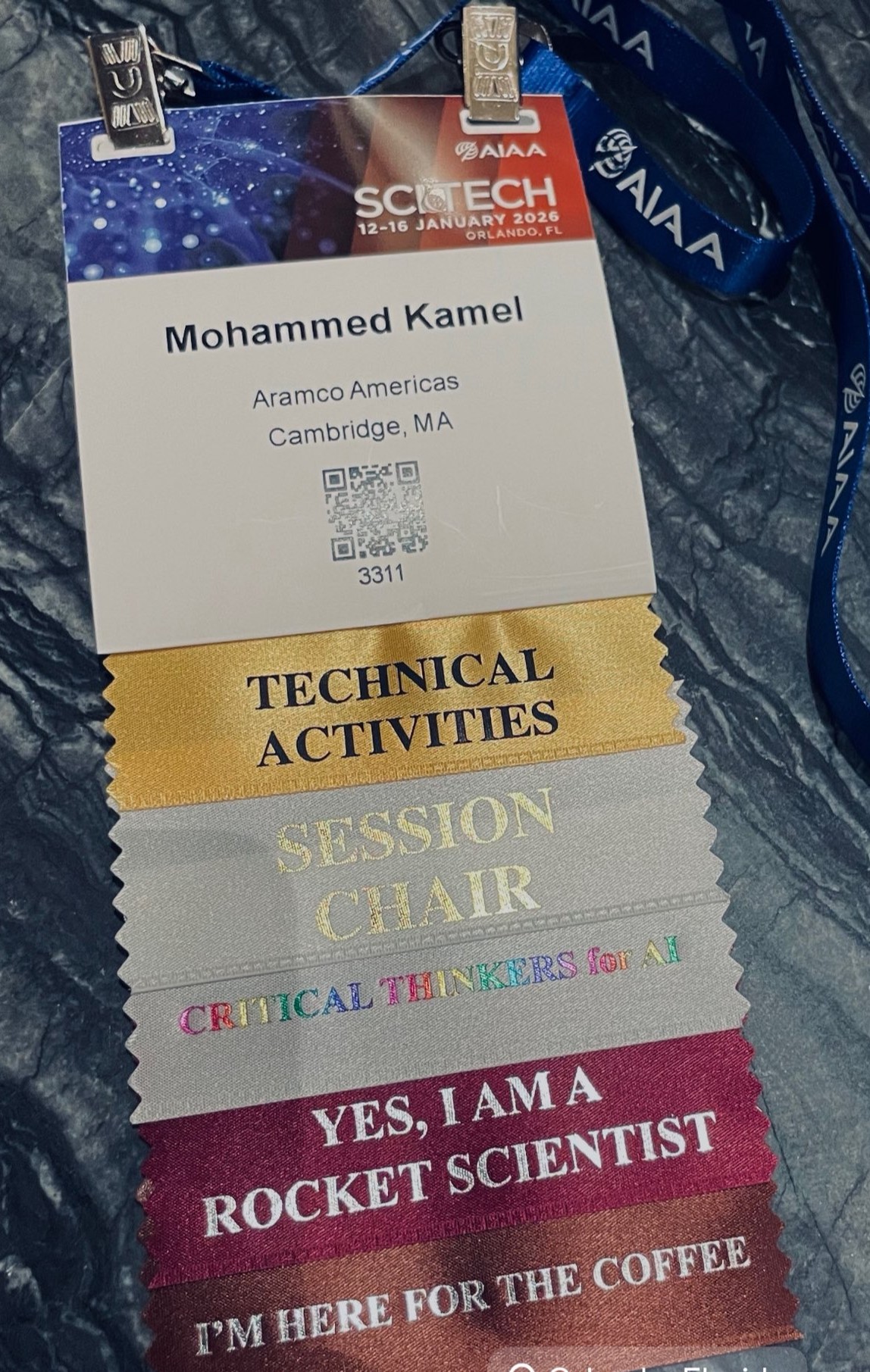
<p>I believe the next stage will not be merely another advance in computing. It may redefine how we understand physics itself. Perhaps my role is not simply to remain an extension of this academic tree, but to contribute—even in a small way—to adding a new branch: one that connects physics, computation, and artificial intelligence, and helps solve what has resisted understanding for decades.</p>]]></content><author><name>Mohammed Kamel</name></author><category term="academic-genealogy" /><category term="fluid-mechanics" /><category term="turbulence" /><category term="computation" /><category term="mentorship" /><summary type="html"><![CDATA[Reflections on mentorship, academic roots, turbulent flow, and building a bridge among physics, computation, and artificial intelligence.]]></summary><media:thumbnail xmlns:media="http://search.yahoo.com/mrss/" url="https://www.mohammedkamel.com/assets/files/photos/mxkamel-avatar.png" /><media:content medium="image" url="https://www.mohammedkamel.com/assets/files/photos/mxkamel-avatar.png" xmlns:media="http://search.yahoo.com/mrss/" /></entry><entry xml:lang="ar"><title type="html">الحوسبة كمنهج، والصناعة كمسار</title><link href="https://www.mohammedkamel.com/ar/blog/computational-mindset-industry-pursuit/" rel="alternate" type="text/html" title="الحوسبة كمنهج، والصناعة كمسار" /><published>2026-02-01T00:00:00+00:00</published><updated>2026-02-01T00:00:00+00:00</updated><id>https://www.mohammedkamel.com/ar/blog/computational-physics-industry-academia.rtl</id><content type="html" xml:base="https://www.mohammedkamel.com/ar/blog/computational-mindset-industry-pursuit/"><![CDATA[<p>بعد انتهاء <strong>منتدى AIAA SciTech 2026</strong> السنوي للعلوم والتقنية، الذي ينظمه المعهد الأمريكي للملاحة الجوية والفضائية، وجدت بعض الوقت لأسجّل خواطر ولحظات أحببت مشاركتها. لا تقتصر هذه الخواطر على الجانب التقني؛ فهي تتناول أيضًا الأشخاص المؤثرين، والأولويات العملية، والسمات الشخصية التي تشكّل قراراتنا المهنية والحياتية.</p>

<figure class="post-figure">
  <img class="post-image" src="/assets/posts/2026-02-01-computational-physics-industry-academia/sqr-3.jpg" alt="بطاقة مؤتمر AIAA SciTech 2026 وشارات رئاسة الجلسات" loading="eager" decoding="async" fetchpriority="high" width="1148" height="1811" />
  
    <figcaption class="post-image-caption">بطاقة مؤتمر AIAA SciTech 2026 وشارات رئاسة الجلسات.</figcaption>
  
</figure>

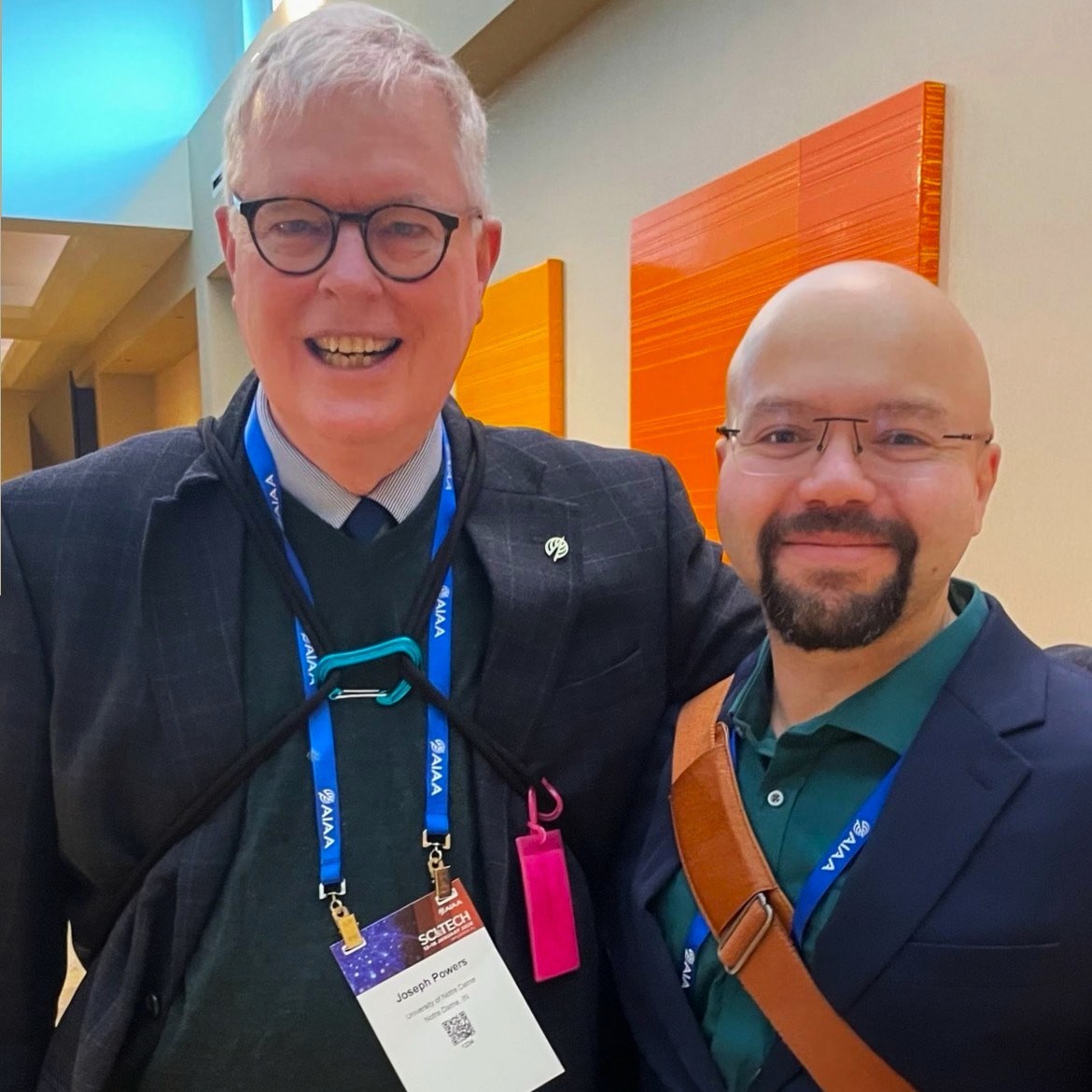
<p>أولى هذه اللحظات صورة عفوية التقطتها مع أستاذي البروفيسور <strong>جوزيف باورز (Joseph Powers)</strong> في أحد أيام المؤتمر المزدحمة، وبعد عدد لا بأس به من أكواب القهوة، والتي تقدم أثناء جلسات المؤتمر. لطالما اعتبرته قدوة ونموذجًا رائدًا في الفيزياء الحاسوبية. وقد كنت محظوظًا بأن أكون أحد طلابه، ثم عملت معه مساعدًا للتدريس في مقررات الرياضيات المتقدمة والطرق العددية لطلبة الدراسات العليا، خلال دراستي للدكتوراه في هندسة الطيران والفضاء بجامعة نوتردام. وهناك انصبّ عملي على <strong>ديناميكا الموائع الحسابية (Computational Fluid Dynamics — CFD)</strong> و<strong>الحوسبة عالية الأداء (High-Performance Computing — HPC)</strong>.</p>

<p>لم تكن قيمة هذه التجربة في الأدوات التي تعلمتها فحسب، بل في طريقة التفكير نفسها: كيف أفكك المشكلة إلى عناصرها الأساسية من دون أن أفقد الصورة الكلية، وكيف أمزج بين الرياضيات والحدس الفيزيائي والحوسبة لفهم نظام معقّد. وحتى بعد تخرجي والتحاقي بفريق البحث والتطوير في شركة المحاكاة الرقمية <strong>أنسيس (Ansys)</strong>، ظللت ألتقي البروفيسور باورز في هذا المؤتمر على مرّ السنين. لذلك حملت الصورة الحديثة معه معنى خاصًا؛ فقد ذكّرتني بأن اختياري للطرق الحوسبية والكمّية كان منهجًا للبحث والتطوير، لا مجرد مجموعة من الأدوات التقنية.</p>

<figure class="post-figure">
  <img class="post-image" src="/assets/posts/2026-02-01-computational-physics-industry-academia/sqr-1.jpg" alt="محمد كامل مع البروفيسور جوزيف باورز في مؤتمر AIAA SciTech 2026" loading="lazy" decoding="async" width="1170" height="1170" />
  
    <figcaption class="post-image-caption">مع البروفيسور جوزيف باورز في مؤتمر AIAA SciTech 2026.</figcaption>
  
</figure>

<p>تعود جذور هذا الاختيار إلى دراسة الماجستير في هندسة الطيران والفضاء بجامعة القاهرة، حين اخترت محاكاة <strong>محركات الرامجت ذات الاحتراق فوق الصوتي (Supersonic Combustion Ramjets — Scramjets)</strong> المستخدمة في تطبيقات الطيران فرط الصوتي. وفي هذا النوع من المحركات يظل تدفق الهواء داخل غرفة الاحتراق أسرع من الصوت. كان دافعي الأول عمليًا؛ فالمحاكاة الرقمية تتيح دراسة عدد كبير من التصميمات بكفاءة وتكلفة أقل من كثير من الاختبارات المعملية واسعة النطاق.</p>

<p>ولا يعني ذلك أن المحاكاة تحل محل التجربة؛ فالتجارب تظل ضرورية لفهم الظواهر والتحقق من النماذج. لكن الحوسبة تساعدنا على اختبار الفرضيات، واستكشاف تصميمات أكثر، وفهم أثر المتغيرات المختلفة قبل الانتقال إلى التجارب الأعلى تكلفة. وهنا تظهر قيمة التكامل بين النظرية والمحاكاة والتجربة، لا المفاضلة بينها.</p>

<p>أما دافعي للاستمرار في هذا المجال خلال الدكتوراه وما بعدها، فكان أعمق من حسابات التكلفة والكفاءة. لقد جذبني المزج بين الرياضيات المتقدمة والحوسبة والتحليل الكمي للقوانين الفيزيائية الحاكمة، وما يتيحه ذلك من نظرة تفكيكية لا تفقد الصورة الكلية عند التعامل مع <strong>المشكلات متعددة الأبعاد والمقاييس والظواهر الفيزيائية (Multidimensional, Multiscale, Multiphysics Problems)</strong>. وهي مشكلات تتفاعل فيها ظواهر عدة، مثل الجريان وانتقال الحرارة والاحتراق، عبر مقاييس مكانية وزمنية مختلفة.</p>

<p>لا يمكن عادةً تمثيل هذه المشكلات بكامل تفاصيلها من خلال <strong>حلول تحليلية مغلقة (Closed-form Analytical Solutions)</strong>؛ أي حلول رياضية مباشرة يمكن كتابتها في صورة نهائية من دون حل عددي متكرر. فالتحليل الرياضي يضطر غالبًا إلى عزل بعض الظواهر أو تقليل عدد المتغيرات، بينما لا تعمل ظواهر الواقع المعقّد كلٌّ منها بمعزل عن الأخرى. لكن تعذّر الحل المغلق لا يعني تعذّر الفهم؛ فمن هنا تبدأ قيمة المنهج الحوسبي، بتحويل القوانين الحاكمة إلى نماذج عددية يمكن اختبارها والتحقق منها ومقارنتها بالواقع.</p>

<p>ونتيجة لاختياري أن أكون فيزيائيًا حاسوبيًا ومصممًا لأنظمة المحاكاة الرقمية، فُتحت أمامي أبواب المساهمة في صناعات مختلفة: من الطيران والفضاء، مرورًا بالسيارات والمحركات والطاقة المتجددة والبطاريات والإلكترونيات، وصولًا إلى قطاع النفط والغاز. ورغم اختلاف هذه الصناعات، ظل السؤال الأساسي واحدًا: كيف نحوّل فهمنا للفيزياء والرياضيات إلى برمجيات موثوقة وحلول عملية قابلة للتوسع؟</p>

<p>هذا التنوع لم يشتت اهتمامي، بل كشف لي الرابط بين تلك المجالات. وقد حفّزني على الكتابة عن الأفكار التي تربط بين الفيزياء والرياضيات وهندسة البرمجيات، بل وحتى الفلسفة، من منظور حوسبي وكمّي. لطالما خططت لمشاركة بعض الخواطر التقنية وغيرها من خلال تجاربي ووجهة نظري، لكنني كنت دائمًا جيدًا في إيجاد الأعذار: ضيق الوقت، وقلة الطاقة، والتسويف، والنزعة إلى المثالية. كنت أريد للكتابة أن تكون سهلة وسلسة من جهة، ومتكاملة ودقيقة من جهة أخرى، ويزداد ذلك صعوبة حين أكتب بالعربية الفصحى في موضوعات تشكّلت معظم مصطلحاتها الحديثة في سياق إنجليزي.</p>

<p>لكن اتضح لي أن الكتابة عضلة لا تتحسن إلا بالتمرين. ولا بد لهذا التمرين من أن يشمل المحاولة، وتقبّل الخطأ، ثم مراجعته وتصحيحه والاستمرار بعده. فالكتابة، مثل البحث والتطوير، عملية متكررة من <strong>«المحاولة والخطأ» (Trial and Error)</strong>، لا لحظة واحدة نصل فيها إلى الكمال.</p>

<p>ومن هنا أصل إلى جانب آخر من تجربتي في المؤتمر: مساهمتي في أنشطة <strong>اللجنة التقنية لتوليد الشبكات العددية والتمثيل البصري وبيئات الحوسبة (Meshing, Visualization, and Computational Environments — MVCE)</strong>. وتهتم هذه المجالات بما يهيئ النموذج قبل الحل العددي، وما يعرض نتائجه بعده، وما يربط أدوات المحاكاة بعضها ببعض.</p>

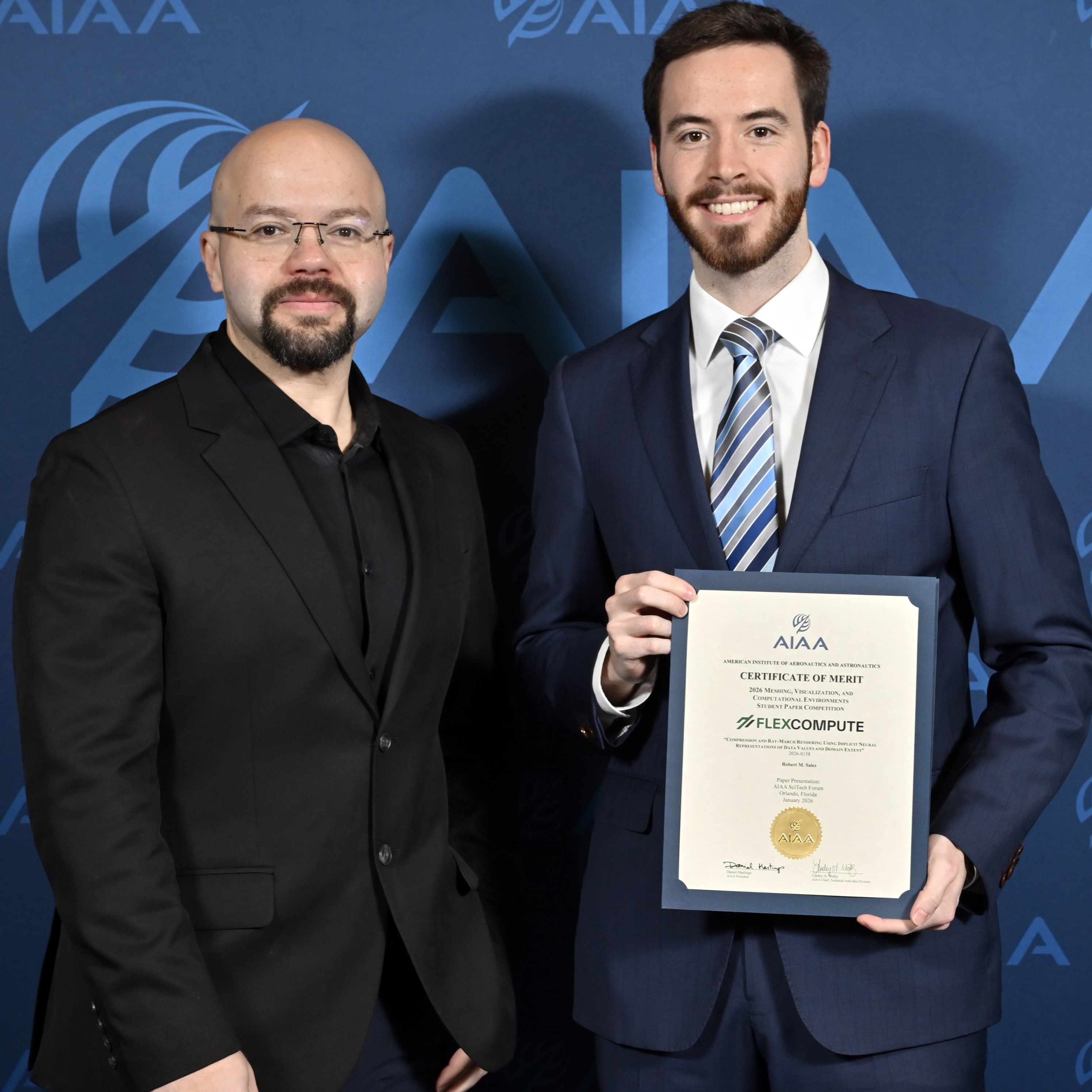
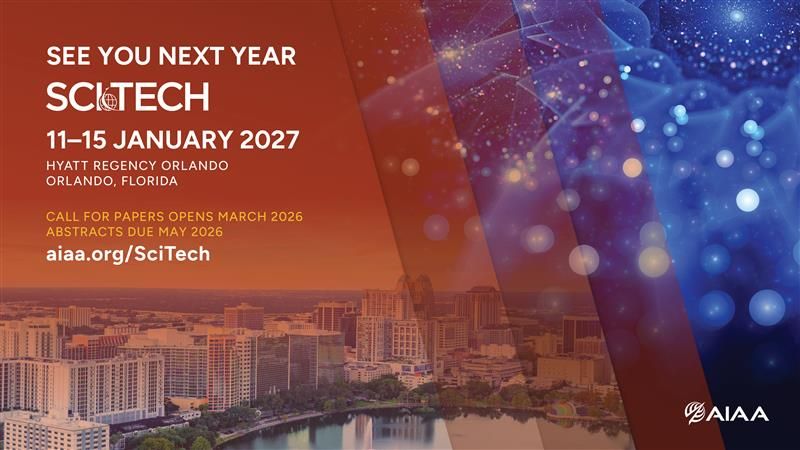
<p>تلقيت خلال هذه التجربة كثيرًا من النصح والتوجيه من رواد صناعة برمجيات المحاكاة والتصميم الهندسي، ومنهم <strong>إيف-ماري لوفيفر (Yves-Marie Lefebvre)</strong>، المدير التقني لشركة <strong>تيكبلوت (Tecplot)</strong>، الذي تولى رئاسة التخصص بالإنابة خلال المؤتمر. وكان العمل معه، بصفتي نائبًا له، تجربة ثرية شملت تحرير أحدث الأبحاث ومراجعتها، والمساهمة في إدارة الجلسات، وتقييم أبحاث الطلبة، والاحتفاء بالأعمال المتميزة. ومن اللحظات التي أسعدتني الاحتفاء بعمل <strong>روبرت سيلز (Robert Sales)</strong>، الفائز بجائزة أفضل بحث طلابي في تخصص MVCE. فتقدير عمل طالب متميز لا يقتصر على الاحتفاء بنتيجة بحثية؛ بل يشجّع باحثًا في بداية طريقه على الاستمرار. ويسعدني أن أواصل هذه المسؤولية رئيسًا للتخصص في <strong>AIAA SciTech 2027</strong>.</p>

<figure class="post-figure">
  <img class="post-image" src="/assets/posts/2026-02-01-computational-physics-industry-academia/sqr-2.jpg" alt="محمد كامل يقدم إلى روبرت سيلز جائزة أفضل بحث طلابي في تخصص MVCE لعام 2026" loading="lazy" decoding="async" width="2991" height="2991" />
  
    <figcaption class="post-image-caption">تقديم جائزة أفضل بحث طلابي في تخصص MVCE لعام 2026 إلى روبرت سيلز.</figcaption>
  
</figure>

<p>وهذا ما أريد التأكيد عليه: إن مشاركة الباحثين القادمين من القطاع الصناعي في الأنشطة التقنية والبحثية تضيف قيمة فريدة إلى المجتمع العلمي، كما تعود على الباحث نفسه بفائدة علمية ومهنية. فهي ليست وسيلة لرد الجميل إلى المجتمع العلمي من واقع الخبرة الصناعية فحسب؛ بل فرصة للبقاء على اتصال بأحدث التطورات، وتوجيه الطلبة، والاحتفاء بتميزهم، وبناء شراكات وفرق لمشروعات بحثية وصناعية مستقبلية.</p>

<figure class="post-figure">
  <img class="post-image" src="/assets/posts/2026-02-01-computational-physics-industry-academia/sqr-4.jpg" alt="إعلان مؤتمر AIAA SciTech 2027 في أورلاندو بولاية فلوريدا" loading="lazy" decoding="async" width="800" height="450" />
  
    <figcaption class="post-image-caption">إعلان مؤتمر AIAA SciTech 2027 في أورلاندو بولاية فلوريدا.</figcaption>
  
</figure>

<p>وتقودني هذه المشاركة إلى نقطة مهمة أحب أن أشدد عليها، خصوصًا لتشجيع الباحثين في الصناعة على مشاركة نتاجهم البحثي مع الأوساط الأكاديمية والمعامل الوطنية. هناك اعتقاد شائع بأن البحث الجاد يقتصر على الجامعات أو المعامل الحكومية، إلا أن البحث والتطوير في الصناعة مختلف، لكنه ليس أقل صرامة. فهو يوازن بين النظرية والابتكار ومحاولة الإجابة عن أسئلة مفتوحة من جهة، وقيود العالم الحقيقي من جهة أخرى: المواعيد النهائية، والموارد المتاحة، وحقوق الملكية الفكرية، وحماية المعرفة في سوق تنافسية، والاحتياجات الفعلية للمستخدمين والسوق.</p>

<p>هذه القيود لا تقلل قيمة البحث، لكنها تغيّر معنى النجاح. فلا يكفي أن تكون الفكرة صحيحة نظريًا أو أن تنجح مرة واحدة في نموذج أولي؛ بل يجب أن تراعي المنتجات المبنية عليها <strong>قابلية إعادة إنتاج النتائج (Reproducibility)</strong>، و<strong>قابلية التوسع (Scalability)</strong>، و<strong>ضمان الجودة (Quality Assurance)</strong> عبر مراحل البحث والتصميم والتطوير والإنتاج. أي إن النتيجة ينبغي أن تتكرر، والحل ينبغي أن يحافظ على كفاءته عند زيادة حجم المشكلة، والمنتج ينبغي أن يظل موثوقًا في ظروف استخدام مختلفة. وهذا مستوى آخر من الصرامة، يتطلب الموازنة بين العمق النظري والأبعاد التقنية والاقتصادية والتشغيلية.</p>

<p>في النهاية، هذه خواطر أحببت مشاركتها لإثراء الحوار وتبادل الخبرات  وفتح باب للتفكير والنقاش،  ،وخاصة بين المتحدثين باللغة العربية، وتسليط الضوء على أهمية المنهج الحوسبي ودور مدّ الجسور بين الحوسبة والبحث العلمي والقطاع الصناعي. وآمل أن يجد فيها باحث أو مهندس شاب ما يشجعه على مشاركة عمله، والتعلم من خطأ من سبقوه، وبناء طريقه من دون انتظار اللحظة المثالية التي لن تأتي.</p>]]></content><author><name>Mohammed Kamel</name></author><category term="computational-physics" /><category term="simulation" /><category term="industry" /><category term="academia" /><category term="modeling" /><summary type="html"><![CDATA[تأملات في الربط بين الفيزياء والمحاكاة والبرمجيات من خلال التفكير الحوسبي، لتحويل الأسئلة العلمية المعقّدة إلى حلول صناعية موثوقة وقابلة للتوسع.]]></summary><media:thumbnail xmlns:media="http://search.yahoo.com/mrss/" url="https://www.mohammedkamel.com/assets/files/photos/mxkamel-avatar.png" /><media:content medium="image" url="https://www.mohammedkamel.com/assets/files/photos/mxkamel-avatar.png" xmlns:media="http://search.yahoo.com/mrss/" /></entry><entry xml:lang="en"><title type="html">Computation as a Mindset, Industry R&amp;amp;D as a Pursuit</title><link href="https://www.mohammedkamel.com/blog/computational-mindset-industry-pursuit/" rel="alternate" type="text/html" title="Computation as a Mindset, Industry R&amp;amp;D as a Pursuit" /><published>2026-02-01T00:00:00+00:00</published><updated>2026-02-01T00:00:00+00:00</updated><id>https://www.mohammedkamel.com/blog/computational-physics-industry-academia</id><content type="html" xml:base="https://www.mohammedkamel.com/blog/computational-mindset-industry-pursuit/"><![CDATA[<p>After <strong>AIAA SciTech 2026</strong> concluded, I had a quiet moment to reflect on a few experiences and thoughts worth sharing—less about technical content and more about the people and moments that quietly shape a professional journey. They are also about methodological choices, practical priorities, and personal traits that influence our professional and life decisions.</p>

<figure class="post-figure">
  <img class="post-image" src="/assets/posts/2026-02-01-computational-physics-industry-academia/sqr-3.jpg" alt="AIAA SciTech 2026 conference badge and session-chair ribbons" loading="eager" decoding="async" fetchpriority="high" width="1148" height="1811" />
  
    <figcaption class="post-image-caption">AIAA SciTech 2026 conference badge and session-chair ribbons.</figcaption>
  
</figure>

<p>One moment that stood out was a spontaneous and warm photo taken during a busy conference day with Professor <strong>Joseph Powers</strong>, after more than a few cups of conference coffee. I consider Professor Powers a true role model in computational physics. I was fortunate to be one of his graduate students and later worked with him as a Teaching Assistant for graduate courses in mathematics and numerical methods during my Ph.D. in Aerospace Engineering at the University of Notre Dame. There, my work focused on <strong>Computational Fluid Dynamics (CFD)</strong> and <strong>High-Performance Computing (HPC)</strong>.</p>

<p>From him, I learned how to blend advanced mathematics, numerical analysis, physical intuition, and computation to approach complex problems. The value of that experience extended beyond any particular tool or method. It was about the way of thinking itself: how to decompose a problem into its essential elements without losing sight of the bigger picture. Even after graduating and joining the R&amp;D team at <strong>Ansys</strong>, I continued to meet Professor Powers at this conference over the years. That recent photo felt especially meaningful because it reminded me that my choice to adopt computational and quantitative approaches was a commitment to a methodology for research and development—not merely to a collection of technical tools.</p>

<figure class="post-figure">
  <img class="post-image" src="/assets/posts/2026-02-01-computational-physics-industry-academia/sqr-1.jpg" alt="Mohammed Kamel with Professor Joseph Powers at AIAA SciTech 2026" loading="lazy" decoding="async" width="1170" height="1170" />
  
    <figcaption class="post-image-caption">With Professor Joseph Powers at AIAA SciTech 2026.</figcaption>
  
</figure>

<p>The roots of that choice go back to my master’s work in Aerospace Engineering at Cairo University, where I studied numerical simulations of <strong>supersonic-combustion ramjet engines, or Scramjets</strong>, for hypersonic flight applications. In this type of engine, airflow remains supersonic through the combustion chamber. My initial motivation was practical: computational modeling and simulation allowed me to study many designs more efficiently and at a lower cost than many large-scale experimental setups.</p>

<p>This does not mean that simulation replaces experimentation. Experiments remain essential for understanding physical phenomena and validating models. Computation, however, allows us to test hypotheses, explore more designs, and understand the influence of different variables before moving to the most expensive stages of experimental testing. The real value comes from integrating theory, simulation, and experiment—not choosing one at the expense of the others.</p>

<p>What motivated me to continue in this field during my Ph.D. and beyond was deeper than cost and efficiency. I was drawn to blending advanced mathematics and computation with quantitative analysis of governing physical laws. This combination makes it possible to decompose a problem without losing sight of the whole, especially when addressing <strong>multidimensional, multiscale, and multiphysics problems</strong>—problems in which phenomena such as fluid flow, heat transfer, and combustion interact across different spatial and temporal scales.</p>

<p>Such problems usually cannot be represented in full detail through <strong>closed-form analytical solutions</strong>: direct mathematical solutions that can be written in a final form without iterative numerical computation. Analytical methods often isolate some phenomena or reduce the number of variables, while those phenomena do not operate independently in complex physical systems. This limitation does not diminish their value. Analytical methods provide fundamental understanding, reveal important relationships and limiting behavior, and offer indispensable references for assessing numerical models. But the absence of a closed-form solution does not mean that understanding is out of reach. This is where the computational mindset begins—by translating governing laws into numerical models that can be implemented, tested, and compared with physical reality.</p>

<p>A computational model must then pass two distinct tests. <strong>Verification</strong> asks whether the equations and numerical methods were implemented and solved as intended; <strong>validation</strong> asks whether the resulting model represents physical reality with sufficient fidelity for its intended use. The process also requires understanding uncertainty and distinguishing genuine physical behavior from numerical artifacts or software defects.</p>

<p>This computational mindset opened doors for me to contribute as a computational physicist and simulation architect across aerospace, automotive systems, engines, electrification, renewable energy, batteries, electronics, oil and gas, reservoir simulation, and beyond. Despite the differences among these industries, the central question remained the same: How do we translate our understanding of physics and mathematics into reliable software and practical, scalable solutions?</p>

<p>Rather than fragmenting my interests, that breadth revealed the connection among these fields. It motivated me to write about ideas linking physics, mathematics, software engineering, and even philosophy through a computational and quantitative lens. I had long planned to share technical reflections and other thoughts shaped by my experiences and perspective, but I also became very good at finding excuses: limited time and energy, procrastination, and a tendency toward perfectionism. I wanted the writing to be simple and accessible on one side, yet complete and precise on the other. That becomes even more challenging when writing in formal Arabic about subjects whose modern terminology has largely developed within an English-language context.</p>

<p>It has become clear to me that writing is a muscle that improves only through practice. That practice must include trying, accepting mistakes, reviewing and correcting them, and continuing afterward. Like research and development, writing is an iterative process of <strong>trial and error</strong>, not a single moment in which perfection is achieved.</p>

<p>I was also fortunate to contribute to the technical activities of the <strong>Meshing, Visualization, and Computational Environments (MVCE) Technical Committee</strong> as Deputy Discipline Chair during AIAA SciTech 2026. These fields cover the tools and infrastructure used to prepare models before numerical solution, present their results afterward, and connect simulation tools and workflows.</p>

<p>I benefited greatly from the guidance of the Discipline Chair, <strong>Yves-Marie Lefebvre</strong>, CTO of <strong>Tecplot</strong>, throughout the process. Working with him as Deputy Discipline Chair was a rich experience. Beyond editing and reviewing papers, chairing technical sessions, and evaluating student work, one of the most rewarding moments was recognizing <strong>Robert Sales</strong>, winner of the MVCE Best Student Paper award. Recognizing excellent student work does more than celebrate a research result; it encourages a researcher at the beginning of the journey to continue. I would also like to thank the MVCE TC members for their dedication and contributions to the success of the committee’s activities at SciTech 2026.</p>

<figure class="post-figure">
  <img class="post-image" src="/assets/posts/2026-02-01-computational-physics-industry-academia/sqr-2.jpg" alt="Mohammed Kamel presenting Robert Sales with the 2026 MVCE Best Student Paper award" loading="lazy" decoding="async" width="2991" height="2991" />
  
    <figcaption class="post-image-caption">Presenting Robert Sales with the 2026 MVCE Best Student Paper award.</figcaption>
  
</figure>

<p>This experience reinforced for me the value of industry researchers participating actively in technical and research communities. Such participation benefits the scientific community while also contributing to the researcher’s scientific and professional development. It allows us to give back through industrial experience, remain connected to the latest developments, mentor students, celebrate their excellence, and build partnerships and teams for future research and industrial projects.</p>

<p>I am honored to continue serving the MVCE Technical Committee as Discipline Chair for <strong>AIAA SciTech 2027</strong> and to collaborate with AIAA technical committee members on the call for papers for the upcoming conference.</p>

<figure class="post-figure">
  <img class="post-image" src="/assets/posts/2026-02-01-computational-physics-industry-academia/sqr-4.jpg" alt="AIAA SciTech 2027 conference announcement for Orlando, Florida" loading="lazy" decoding="async" width="800" height="450" />
  
    <figcaption class="post-image-caption">AIAA SciTech 2027 conference announcement for Orlando, Florida.</figcaption>
  
</figure>

<p>This participation leads to an important point that I want to emphasize, particularly to encourage researchers in industry to share their work with academic communities and national laboratories. There is a common perception that serious research is confined to universities or government labs. Industry R&amp;D is different from academic research, but it is not less rigorous. It balances theory, innovation, and the pursuit of answers to open-ended questions with real-world constraints: deadlines, available resources, intellectual property rights, the protection of proprietary knowledge in a competitive market, and the actual needs of users and the market.</p>

<p>These constraints do not reduce the value of research, but they change the meaning of success. It is not enough for an idea to be theoretically correct or to work once in a prototype. The research results and products built on them must meet demanding requirements for <strong>reproducibility, scalability</strong>, and <strong>quality assurance</strong> throughout research, design, development, and production. In other words, results should be repeatable, the solution should remain efficient as the problem grows, and the product should remain reliable under different operating conditions. This represents another level of rigor—one that balances theoretical depth with technical, economic, and operational considerations.</p>

<p>The point is not to place industry above academia, or academia above industry. Each operates with different goals, incentives, strengths, and constraints. Scientific and technical progress is strongest when universities, national laboratories, and industry interact—exchanging questions, methods, and experience while respecting intellectual property boundaries and the responsibilities of each institution.</p>

<p>In the end, these are reflections I wanted to share to enrich dialogue, exchange experiences, and open space for thought and discussion—especially among Arabic speakers. I hope they highlight the importance of the computational mindset and of building bridges among computation, scientific research, and industry. I also hope that a young researcher or engineer finds in them some encouragement to share their work, learn from the mistakes of those who came before them, and build their own path without waiting for a perfect moment that may never come.</p>]]></content><author><name>Mohammed Kamel</name></author><category term="computational-physics" /><category term="simulation" /><category term="industry" /><category term="academia" /><category term="modeling" /><summary type="html"><![CDATA[Reflections on connecting physics, simulation, and software through computational thinking to transform complex scientific questions into reliable, scalable industrial solutions.]]></summary><media:thumbnail xmlns:media="http://search.yahoo.com/mrss/" url="https://www.mohammedkamel.com/assets/files/photos/mxkamel-avatar.png" /><media:content medium="image" url="https://www.mohammedkamel.com/assets/files/photos/mxkamel-avatar.png" xmlns:media="http://search.yahoo.com/mrss/" /></entry></feed>